Thoughts & Stories

The Blog

Are You a Real Artist?
May 23, 2026
Industry Talk

Are You a Real Artist?

Everything about being a musician now lives behind a screen — and now AI is flooding the feed. So I took my name off the screen and put it on the streets of LA. Here's why real-life presence still matters more than any algorithm.

Read More →
There's No Such Thing As Making It
May 23, 2025
Industry Talk

There's No Such Thing As "Making It"

The music industry wants you to believe there's a club. A velvet rope. A threshold you have to cross before you're considered successful. That's the illusion — and it's been sold to artists for decades.

Read More →
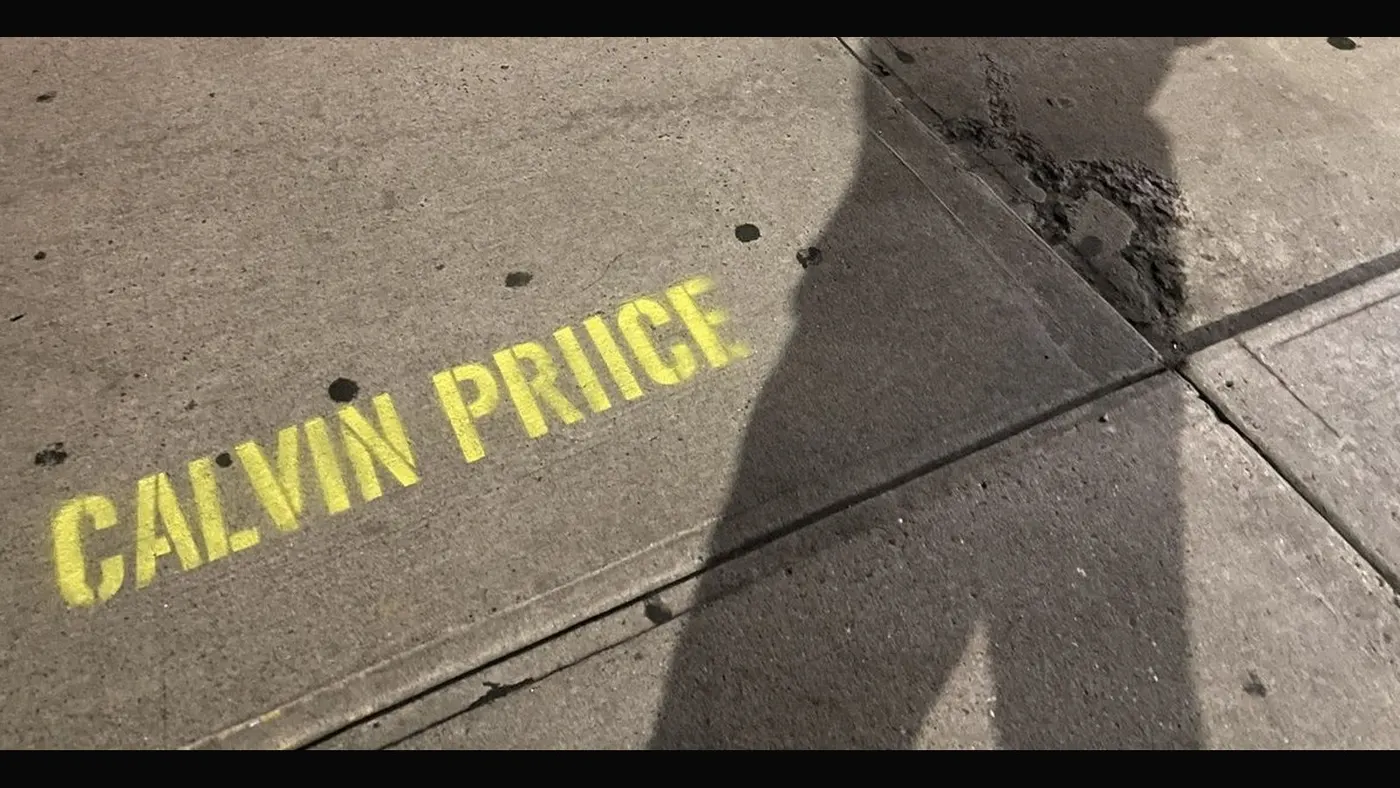
CALVIN PRIICE stenciled in yellow on an LA sidewalk at night, with the artist's own shadow cast across the frame

Are You a Real Artist?

Everything about being a musician now lives behind glass. You make the song on a screen, master it on a screen, upload it through a screen, schedule the posts on a screen — then sit there refreshing a screen waiting to see if anybody felt it. The art never has to touch the real world to "exist." And lately that's started to bother me.

Because if everything happens behind glass, then everything can be faked behind glass. Anyone can sit at a laptop and tailor exactly how the world sees them and their art — the perfect grid, the inflated numbers, the curated story. You can build a whole persona without ever leaving your room. And now, with AI flooding the music industry, you don't even need the room. You can generate the voice, the face, the whole "artist." So the question stops being is the song good and becomes something heavier.

"Are you even real?"

That's not a rhetorical jab — it's the actual thing listeners are starting to feel. When a feed is full of polished, possibly-synthetic everything, what cuts through isn't more polish. It's proof of life. Proof that a real human walked somewhere, made something with their hands, and left a mark you could physically stand in front of. That's where real-life brand awareness comes in, and it's exactly why I started running street campaigns with Phantom Pasting to get my name into the actual city.

Yellow CALVINPRIICE.COM QR stickers pasted on an LA Taco street-art dumpster CALVINPRIICE.COM sticker on a graffiti-covered electrical box in LA

Think about how many ads a person scrolls past before lunch. Hundreds. Thousands. Your post is one card in an infinite deck, and the deck is dealt by a machine that decides who even sees it. You don't own the reach — you rent it, and the rent keeps going up. A sticker on a wall doesn't have an algorithm. It doesn't get throttled because you didn't post yesterday. When somebody's walking down the block and clocks a column of yellow with my name stacked on it ten times, that's a real moment in real space — unskippable, and weirdly more trustworthy because it took effort to physically be there.

Yellow CALVINPRIICE.COM stickers on two stacked CRT TVs dumped on an LA sidewalk, in front of a major-label hip-hop billboard
Two dead CRTs on the curb, each one tagged — parked right under a major-label billboard. The screens are off, but the name's still on.
A tall vertical strip of repeating CALVINPRIICE.COM stickers down a post in LA
Repetition is the trick — one sticker is noise, a whole column is a statement. Every block has a QR code straight to the music.

And here's the part the internet purists miss: physical and digital aren't enemies. Every one of these has a QR code on it. The street stops you; the code closes the loop back to the music. Someone scans it on a corner in LA and three seconds later they're on the site, on the song. That's a fan I earned by existing in the world instead of paying to interrupt their feed.

Full transparency on how this happened: I run a guerrilla marketing agency too. Phantom Pasting is my company — wheat pasting and street campaigns are literally what we do for other people. So when I needed to put Calvin Priice on the map physically, I used my own crew, and I learned a lot being the client for once. Knowing where to place it is the whole game: high-traffic corners, the community boards people actually read, the spots that already have culture so your piece reads as native instead of spam. Doing it consistently, in volume, across a city — that's a campaign, not a craft project.

"You can't fake having been there."

The results aren't a number on a dashboard, and that's the point. It's people saying they saw the name "everywhere." It's scans coming in from neighborhoods I've never personally set foot in. It's the slow build of a name that feels established because it physically occupies space. The street is one of the last places where presence still has to be earned — and earning it is what tells people you're real.

So here's what I actually want to know from you: what are some ways you promote your art that aren't on the internet? We've all got the digital playbook memorized — but what works in the real world? Flyers at venues. Stickers on your gear. CDs and cassettes you hand to people. Painting something nobody asked for. Busking. Mailing zines to fans. The more analog and unhinged, the better. Hit me on Instagram and let's build a list of ways to prove we're real.

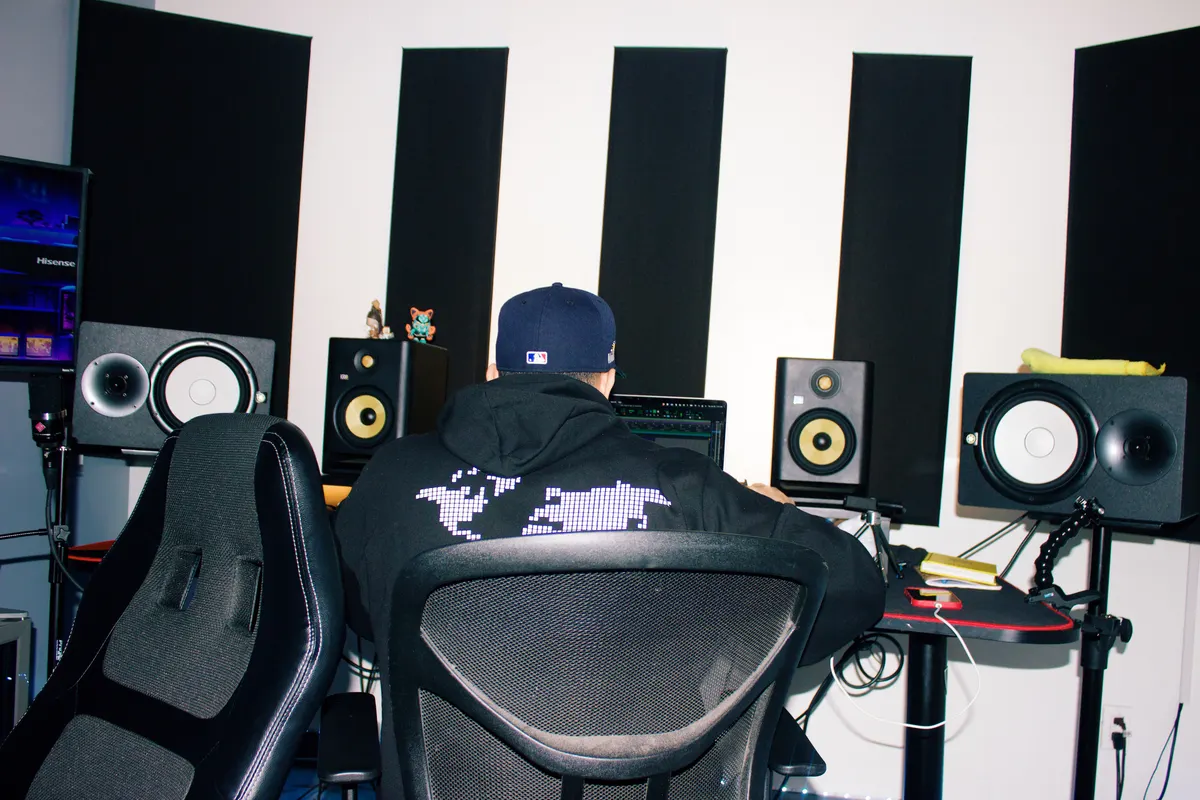
Calvin Priice in the studio

There's No Such Thing As "Making It"

The music industry wants you to believe there's a club. A velvet rope. A threshold you have to cross before you're considered successful. Go viral. Hit a million streams. Get a placement. Get a deal. Get validated by someone with a bigger platform than you. That's the illusion — and it's been sold to artists for decades.

In the studio Working on music

But here's what nobody tells you: the club doesn't exist. There's no finish line. There's no moment where someone hands you a certificate that says you made it. There's just the work, the love, and the decision to keep going.

I've been making music for years. I've had songs that moved people, sessions that felt like magic, moments in the studio where everything just clicked. And I've also had days where the numbers didn't move, the algorithm ignored me, and nobody was paying attention. But none of that changed the fact that I was doing exactly what I was put here to do.

"As long as you're doing what you love to do — you already made it."
Calvin Priice laughing in studio

Think about it — we're living in the most democratized era music has ever seen. A bedroom, a microphone, a laptop, and the right idea can produce a hit record. The tools that used to cost hundreds of thousands of dollars — professional recording studios, mixing engineers, distribution — are now accessible to anyone willing to learn. Logic. FL Studio. GarageBand. You don't need a label to record. You don't need a studio to release.

And that shift is real. Professional recording studios are declining. Not because music is dying — but because music is everywhere. It moved out of the building and into the bedroom. The gatekeepers lost the gate.

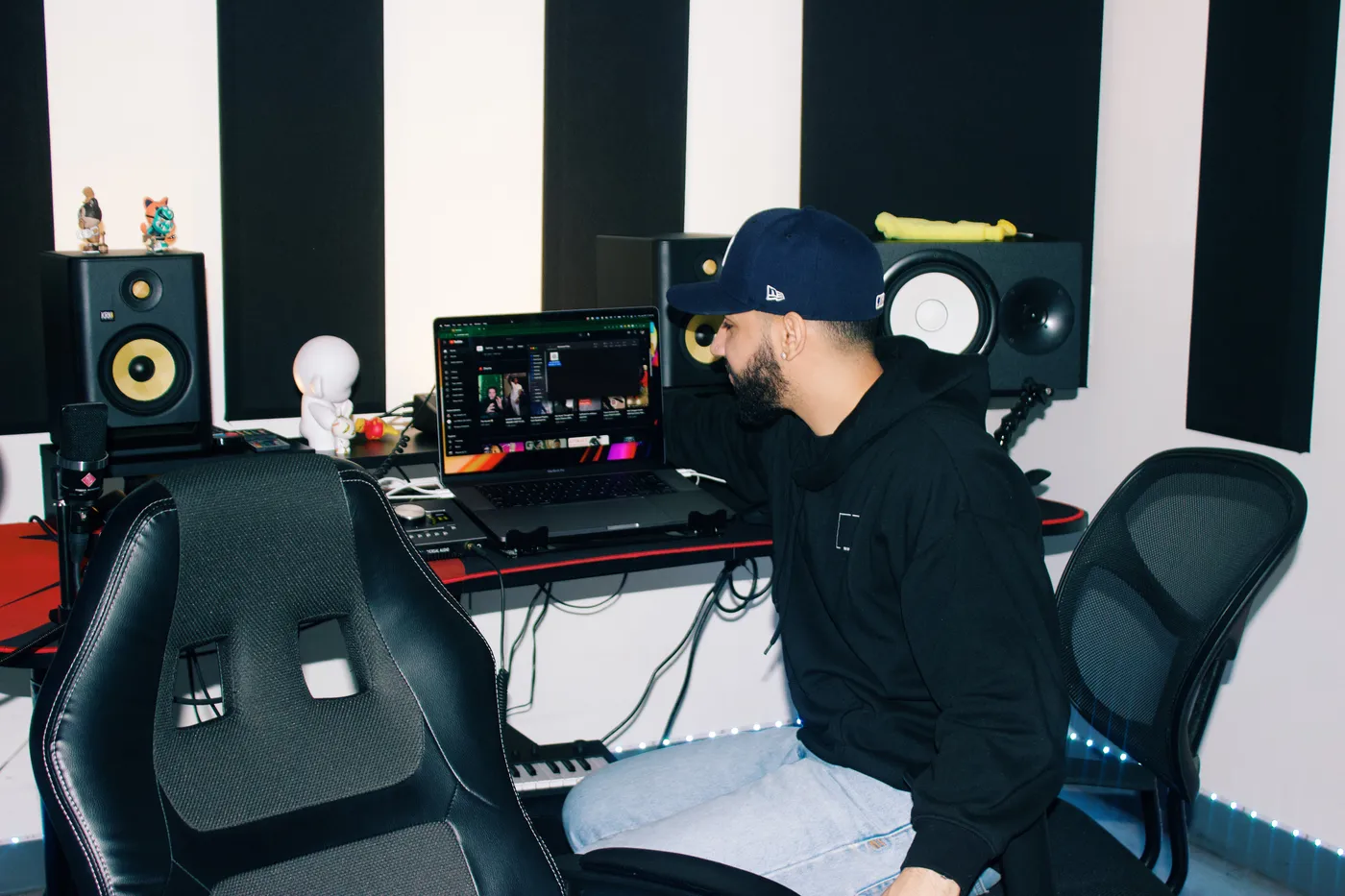
Calvin Priice setup Studio session

The industry still wants you chasing a number. A follower count. A stream milestone. A cosign. They need you to feel like you're not there yet — because that feeling keeps you dependent on their system. But independence is the real power move. When you own your masters, your brand, your audience relationship — nobody can take that from you.

So if you're an artist reading this, grinding in your room, posting into the void, wondering if it's worth it — let me tell you something. The fact that you're creating, that you're showing up, that you're pouring yourself into something real — that's already the win. The rest is details.

"The gate is gone. The only thing left is the music."

Make the music. Share it. Connect with people who feel it. Build your world. That's the job. That's always been the job. Everything else is noise.